





Single Super Phosphate SSP Fertilizer: Benefits, Uses and Composition

Single Super Phosphate SSP is a widely used phosphorus fertilizer that helps support healthy root development and early crop growth. It also supplies calcium and sulphur, two important nutrients required for normal plant development.
Farmers use SSP fertilizer in different cropping systems, including wheat, cotton, rice, maize, sugarcane and vegetables, depending on soil conditions and crop nutrient requirements.
Understanding its composition, benefits and correct application can help farmers make better fertilizer decisions and maintain balanced soil nutrition.
What Is Single Super Phosphate SSP Fertilizer?
Single Super Phosphate, commonly known as SSP, is a phosphorus-based fertilizer produced by treating phosphate rock with sulphuric acid.
It provides phosphorus along with calcium and sulphur. These nutrients play important roles in plant growth, root development and various physiological processes.
Unlike some concentrated phosphorus fertilizers, SSP also supplies sulphur and calcium, making it a useful option where these nutrients are required.
The exact nutrient concentration can vary between products, so farmers should always check the manufacturer’s label before purchasing.
Composition of SSP Fertilizer
SSP fertilizer generally contains three important plant nutrients:
1. Phosphorus
Phosphorus is essential for plant energy transfer and several important growth processes.
It supports:
- Healthy root development.
- Early crop establishment.
- Energy transfer within plants.
- Flowering and seed development.
- Normal plant growth and maturity.
2. Calcium
Calcium is an essential plant nutrient involved in cell wall development and normal growth.
It helps support:
- Cell wall strength.
- Healthy root and shoot development.
- Normal plant tissue formation.
3. Sulphur
Sulphur is required for protein formation and the production of certain amino acids.
It contributes to:
- Protein synthesis.
- Enzyme activity.
- Chlorophyll formation.
- Normal crop growth and development.
Note: Always check the product label for the guaranteed nutrient analysis and the form in which phosphorus is expressed, such as P₂O₅.
Major Benefits of SSP Fertilizer
1. Supports Strong Root Development
Phosphorus plays an important role in early root growth. Adequate phosphorus nutrition helps young plants establish their root systems and access water and nutrients from the soil.
2. Supports Early Crop Establishment
A sufficient supply of phosphorus is particularly important during the early stages of crop development. SSP can help meet crop phosphorus requirements when applied according to soil conditions and fertilizer recommendations.
3. Provides Calcium and Sulphur
SSP supplies calcium and sulphur along with phosphorus. This makes it a useful source of multiple nutrients, particularly in soils where these nutrients are deficient.
4. Supports Flowering and Seed Development
Phosphorus is involved in energy transfer and reproductive development. Maintaining adequate phosphorus nutrition helps support normal flowering, seed formation and crop maturity.
5. Helps Maintain Balanced Crop Nutrition
Plants require several nutrients throughout their growth cycle. SSP can contribute to a balanced fertilizer programme by supplying phosphorus, calcium and sulphur.
Which Crops Can Benefit from SSP Fertilizer?
SSP can be used in different cropping systems where additional phosphorus, calcium or sulphur is required.
Wheat
Wheat requires sufficient phosphorus for early establishment and root development. SSP can be included in the fertilizer programme when recommended by soil analysis or local agronomic guidance.
Cotton
Cotton plants require balanced nutrition throughout their growth cycle. Phosphorus supports root development and energy transfer, while sulphur contributes to normal plant metabolism.
Rice
Rice requires phosphorus for early growth and normal plant development. SSP may be considered where soil conditions and crop requirements indicate a need for phosphorus, calcium or sulphur.
Maize
Phosphorus is important during early maize growth. Adequate availability supports root development and normal crop establishment.
Sugarcane
Sugarcane requires balanced nutrition during its long growing period. SSP can contribute phosphorus, calcium and sulphur to the crop’s fertilizer programme where required.
Vegetables and Orchards
Vegetables and fruit crops also require phosphorus for root development and normal growth. Application should be adjusted according to crop type, soil conditions and nutrient requirements.
When and How Should SSP Fertilizer Be Applied?
SSP is generally applied to the soil, commonly before or during sowing.
For many field crops, basal application is preferred because phosphorus moves relatively slowly through the soil. Placing the fertilizer appropriately can help improve nutrient availability to developing roots.
Consider the following guidelines:
- Apply SSP according to soil test recommendations.
- Prefer application before or during sowing when recommended.
- Incorporate the fertilizer into the soil where appropriate.
- Avoid placing concentrated fertilizer directly against seeds.
- Consider the crop, soil type and previous fertilizer applications before deciding the quantity.
The correct application rate depends on the crop’s phosphorus requirement, existing soil fertility and the nutrient concentration of the fertilizer. Follow the product label and local agricultural recommendations.
SSP Fertilizer vs Other Phosphorus Fertilizers
Different phosphorus fertilizers have different nutrient compositions.
SSP supplies phosphorus, calcium and sulphur. DAP supplies nitrogen and phosphorus, while other phosphorus fertilizers may have different nutrient concentrations.
The best choice depends on the crop’s nutrient requirements, soil analysis, fertilizer availability and the overall nutrient management plan.
Common Questions About SSP Fertilizer
1. What is SSP fertilizer used for?
SSP is used to supply phosphorus, calcium and sulphur to crops. It can support root development, early crop establishment and normal plant growth.
2. What does SSP stand for?
SSP stands for Single Super Phosphate, a phosphorus-based fertilizer.
3. Which nutrients does SSP provide?
SSP generally supplies phosphorus, calcium and sulphur. The exact guaranteed analysis depends on the product.
4. Is SSP suitable for wheat?
SSP can be used in wheat where additional phosphorus, calcium or sulphur is required. The application rate should be based on soil testing and agricultural recommendations.
5. Can SSP be used for cotton?
Yes. SSP can be included in a cotton fertilizer programme when the crop requires phosphorus, calcium or sulphur.
6. When should SSP be applied?
It is commonly applied before or during sowing as a soil fertilizer. The appropriate timing depends on the crop and local recommendations.
7. Can SSP be mixed with other fertilizers?
Compatibility depends on the fertilizers involved, their chemical properties and the application method. Follow product instructions and consult an agricultural expert before mixing fertilizers.
8. Is SSP better than DAP?
Neither fertilizer is universally better. SSP supplies phosphorus, calcium and sulphur, while DAP supplies nitrogen and phosphorus. The appropriate choice depends on soil conditions and crop nutrient requirements.
Choose Quality SSP Fertilizer from Ali Agro Chemicals
Choosing a suitable fertilizer is an important part of effective crop nutrition.
Ali Agro Chemicals provides agricultural inputs to support farmers with their crop nutrition and production requirements.
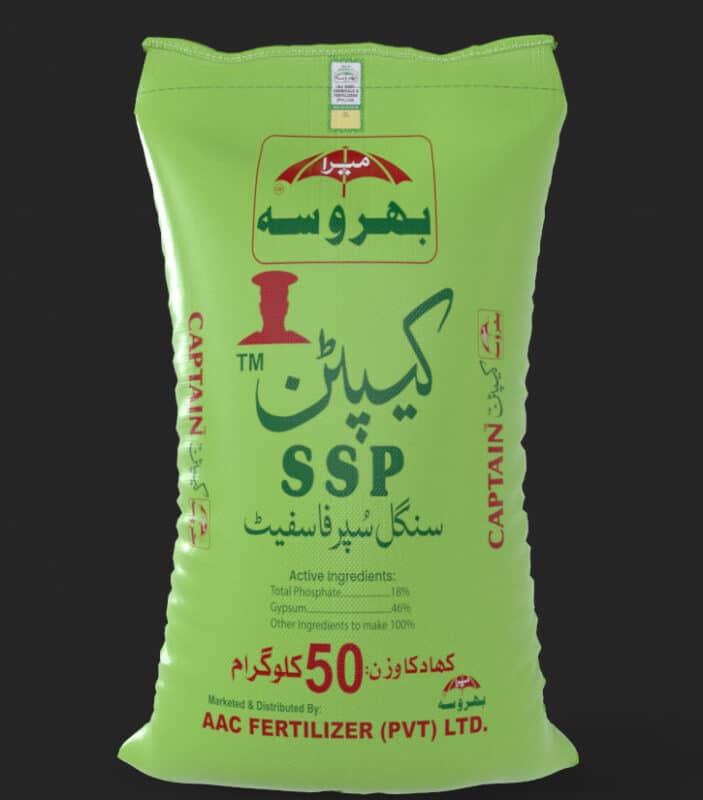
Explore Captain SSP Single Super Phosphate Fertilizer from Ali Agro Chemicals to learn about its product specifications, packaging and availability.
For product information and availability, contact Ali Agro Chemicals.
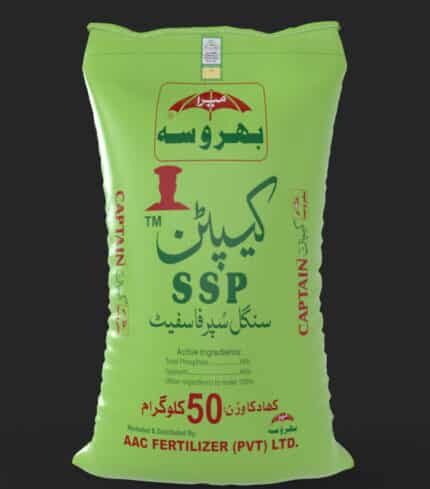
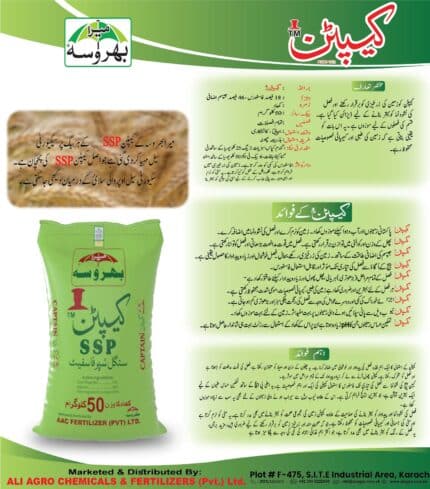




Captain (SSP 18%)
₨ 3,850
Name: Captain
Active Ingredients: 18% Phosphorus, 46% Gypsum
Category: Fertilizer and Nutrients
Pack Size: 50 kilograms
Crops: All crops
Application Time: Pre-sowing, during cultivation
Application Method: Soil application
Application Rate: For wheat, cotton, and vegetables: 3 bags (25 kg each) per acre with 25 kg urea per acre.
For sugarcane, banana, orchards: 6 bags per acre with 50 kg urea per acre.
نام : کیپٹن
مؤثر اجزاٴ : فاسفورس ۱۸ فیصد ،جپسم ۴۶ فیصد
زمرہ : کھاد
پیک سائز : ۵۰کلو گرام
فصلیں : تمام فصلیں
وقت استعمال : بجائی ، کاشتکاری
طریقہ استعمال : بذریعہ چھٹہ
مقدارفی ایکڑ : گندم،کپاس،سبزیات ۳ بیگ ۲۵ کلو یوریا کے ساتھ فی ایکڑ اور گنا،کیلا،باغات، ۶ بیک فی ایکڑ ۵۰ کلو یوریا کے ساتھ استعمال کریں۔
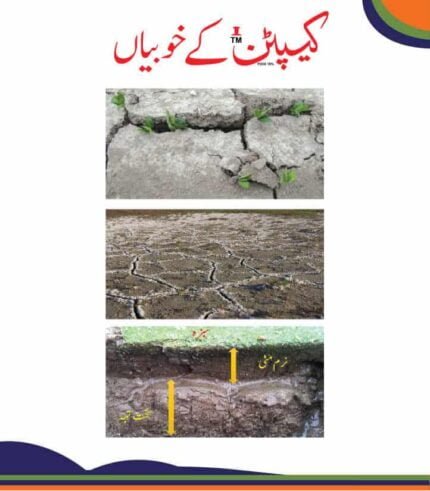
دائرہ اثر : فاسفورس کی کمی کو دور کرتا ہے۔ زمین کی زرخیزی میں اضافہ فراہم کرتا ہے. کلوروفل کے عمل کو تیزکرتاہے ۔ یہ مٹی کو نرم کرتا ہے اور اسی وجہ سے پانی جذب کرنے کے لیے مٹی کی تاثیر کو بہتر بناتا ہے۔
Conclusion
Single Super Phosphate is an important phosphorus fertilizer that also supplies calcium and sulphur. It can support root development, early crop establishment and normal plant growth when used according to crop requirements.
Before applying SSP, consider soil fertility, crop nutrient requirements and the guaranteed nutrient analysis on the product label. A balanced fertilizer programme can help farmers make better use of available nutrients.