





SSP vs DAP Fertilizer: Differences, Benefits and Uses

Choosing the right fertilizer is an important decision for every farmer. Among the commonly used phosphorus fertilizers, Single Super Phosphate (SSP) and Diammonium Phosphate (DAP) are two popular options.
Both fertilizers provide phosphorus, an essential nutrient for plant growth and root development. However, their nutrient compositions are different, which means they serve different roles in a crop nutrition programme.
Understanding the difference between SSP and DAP can help farmers select fertilizers according to their soil conditions, crop requirements and available nutrient sources.
What Is SSP Fertilizer?
Single Super Phosphate (SSP) is a phosphorus fertilizer that also supplies calcium and sulphur.
It is commonly used in agricultural soils where these nutrients are required.
The main nutrients supplied by SSP are:
- Phosphorus.
- Calcium.
- Sulphur.
SSP can support root development, early crop establishment and normal plant growth when used according to crop nutrient requirements.
What Is DAP Fertilizer?
Diammonium Phosphate (DAP) is a concentrated fertilizer that supplies two major plant nutrients: nitrogen and phosphorus.
It is commonly used as a basal fertilizer for different crops.
DAP provides:
- Nitrogen, which supports vegetative growth and the formation of proteins and chlorophyll.
- Phosphorus, which supports energy transfer, root development and reproductive growth.
DAP is frequently used in crop nutrition programmes where both nitrogen and phosphorus are required.
Difference Between SSP and DAP Fertilizer
The main difference between SSP and DAP is their nutrient composition.
| Feature | SSP Fertilizer | DAP Fertilizer |
|---|---|---|
| Full Name | Single Super Phosphate | Diammonium Phosphate |
| Main Nutrients | Phosphorus, calcium and sulphur | Nitrogen and phosphorus |
| Nitrogen | Generally not a significant source | Approximately 18% |
| Phosphorus | Common grades vary | Common grade contains 46% P₂O₅ |
| Calcium | Supplies calcium | Not a significant source |
| Sulphur | Supplies sulphur | Not a significant source |
| Application | Soil application | Soil application |
| Main Role | Supplies phosphorus, calcium and sulphur | Supplies concentrated nitrogen and phosphorus |
Note: Nutrient percentages refer to common fertilizer grades. Always verify the guaranteed analysis on the actual product label.
1. Nutrient Composition
SSP
SSP provides phosphorus along with calcium and sulphur. It may be useful when the soil or crop requires these nutrients in addition to phosphorus.
DAP
DAP provides nitrogen and phosphorus in a concentrated form. It can help supply both nutrients through a single fertilizer application.
The choice depends on which nutrients are required by the crop and which are already available in the soil.
2. Which Fertilizer Is Better for Root Development?
Phosphorus is important for root development and early plant establishment.
Both SSP and DAP supply phosphorus, so either can contribute to crop phosphorus nutrition.
However, the amount of phosphorus supplied depends on the grade and application rate of the fertilizer.
Farmers should compare the actual phosphorus supplied per bag rather than choosing a fertilizer only by its name.
3. Which Fertilizer Supplies Calcium and Sulphur?
SSP supplies calcium and sulphur along with phosphorus.
DAP is primarily a nitrogen and phosphorus fertilizer and is not normally selected as a significant source of calcium or sulphur.
If a soil test identifies a calcium or sulphur deficiency, SSP may be considered as part of the nutrient management programme.
4. SSP vs DAP for Wheat
Wheat requires balanced nutrition throughout its growth cycle.
Phosphorus is particularly important during early crop development, while nitrogen is required for vegetative growth and other plant functions.
When to Consider SSP for Wheat
SSP may be suitable when:
- The soil requires additional phosphorus.
- Calcium or sulphur is also required.
- The fertilizer programme needs a source of phosphorus along with these nutrients.
When to Consider DAP for Wheat
DAP may be suitable when:
- Both nitrogen and phosphorus are required.
- A concentrated phosphorus fertilizer is preferred.
- The nitrogen supplied by DAP is accounted for in the overall fertilizer programme.
The final choice should be based on soil testing and the crop’s total nitrogen and phosphorus requirements.
5. SSP vs DAP for Cotton
Cotton requires balanced nutrient management from establishment through flowering and boll development.
SSP can provide phosphorus, calcium and sulphur where required.
DAP can provide nitrogen and phosphorus.
Farmers should consider soil fertility, irrigation, crop stage and the complete fertilizer programme before selecting either product.
6. SSP vs DAP for Sugarcane
Sugarcane has a long growing period and requires a well-planned nutrient management programme.
Both SSP and DAP can contribute phosphorus, but their additional nutrients differ.
SSP provides calcium and sulphur, while DAP provides nitrogen. The appropriate option depends on soil nutrient status and the crop’s overall fertilizer requirements.
7. Can SSP and DAP Be Used Together?
SSP and DAP can both be included in a fertilizer programme if the crop and soil require the nutrients they supply.
However, using both fertilizers without adjusting the overall nutrient plan may result in excessive phosphorus application.
Before applying them together:
- Check the soil’s phosphorus status.
- Calculate the total phosphorus supplied by both products.
- Account for the nitrogen supplied by DAP.
- Consider calcium and sulphur requirements.
- Follow local agricultural recommendations.
Using more fertilizer does not automatically result in better crop growth. Balanced nutrient management is more important.
8. Which Fertilizer Should Farmers Choose?
There is no single fertilizer that is best for every field.
Consider SSP when the crop requires phosphorus along with calcium and sulphur.
Consider DAP when the crop requires concentrated phosphorus along with nitrogen.
Before making a decision, farmers should evaluate:
- Soil test results.
- Crop type and expected nutrient demand.
- Existing soil nutrient levels.
- Previous fertilizer applications.
- Fertilizer grade and nutrient concentration.
- Overall fertilizer cost per unit of nutrient supplied.
Frequently Asked Questions
1. What is the main difference between SSP and DAP?
SSP supplies phosphorus, calcium and sulphur, while DAP supplies nitrogen and phosphorus.
2. Is SSP better than DAP?
Neither is universally better. SSP and DAP have different nutrient compositions, and the right choice depends on crop requirements and soil conditions.
3. Which fertilizer is better for wheat?
Both can be used in wheat fertilizer programmes. SSP may be considered when calcium and sulphur are also required, while DAP supplies nitrogen and phosphorus. Soil testing helps determine the appropriate choice.
4. Does SSP contain nitrogen?
SSP is not normally considered a significant nitrogen fertilizer. Its main nutrients are phosphorus, calcium and sulphur.
5. Does DAP contain sulphur?
Standard DAP is primarily a nitrogen and phosphorus fertilizer. Do not rely on it as a sulphur source unless the specific product label confirms sulphur content.
6. Can SSP be applied before sowing?
Yes. SSP is commonly applied before or during sowing as a soil fertilizer, depending on crop requirements and local recommendations.
7. Can farmers use SSP instead of DAP?
SSP can supply phosphorus, but it does not provide the same nitrogen contribution as DAP. If DAP is replaced with SSP, the fertilizer programme may need an adjustment to meet the crop’s nitrogen requirement.
8. Can SSP and DAP be mixed?
Their use together may be possible, but the total nutrient application must be calculated carefully. Follow product instructions and seek agronomic advice before mixing or applying fertilizers.
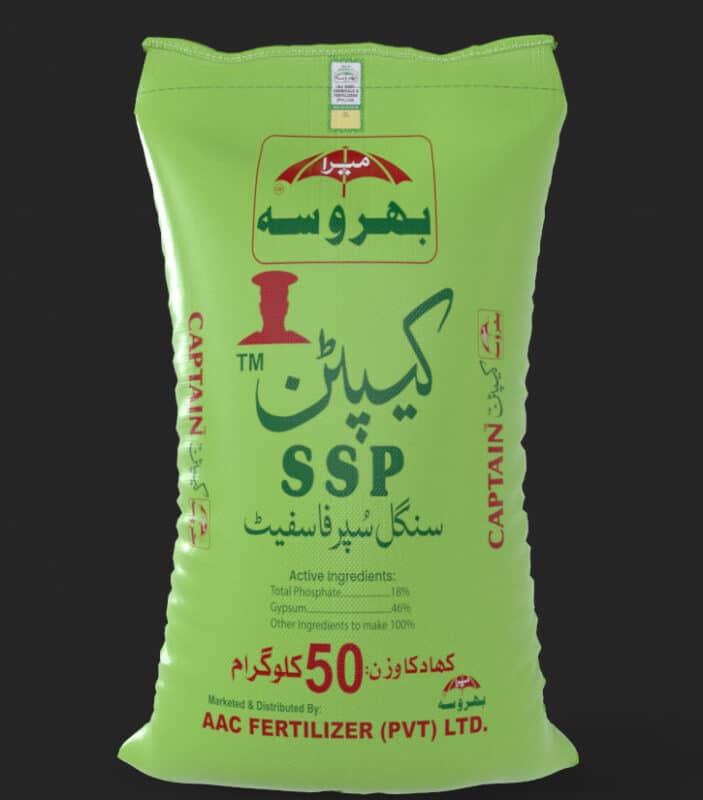
Explore Captain SSP Fertilizer from Ali Agro Chemicals
Ali Agro Chemicals offers agricultural fertilizers and crop nutrition solutions for farmers.
If your crop requires phosphorus along with calcium and sulphur, explore Captain SSP Single Super Phosphate Fertilizer.
Review its specifications, packaging and availability before making your purchase.
View Captain SSP Single Super Phosphate Fertilizer
For more information, contact Ali Agro Chemicals.
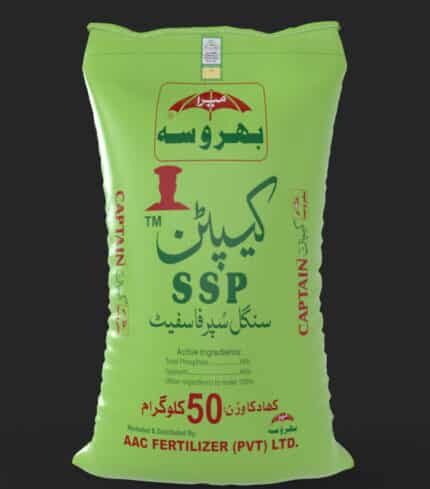
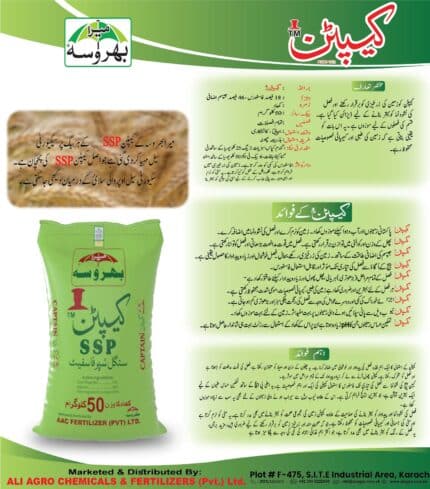


Captain (SSP 18%)
₨ 3,850
Name: Captain
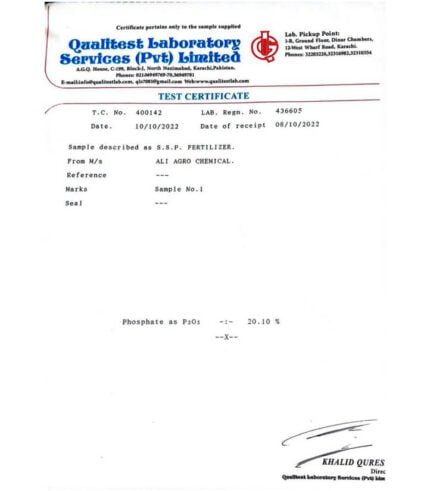
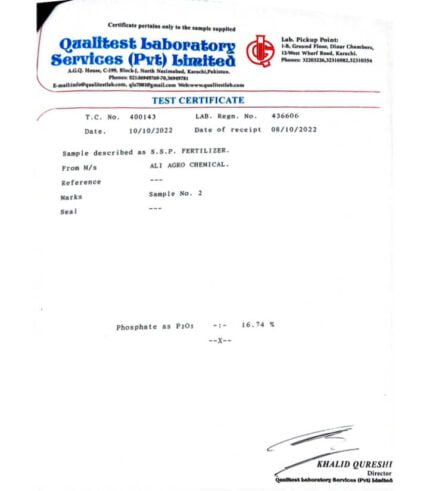
Active Ingredients: 18% Phosphorus, 46% Gypsum
Category: Fertilizer and Nutrients
Pack Size: 50 kilograms
Crops: All crops
Application Time: Pre-sowing, during cultivation
Application Method: Soil application
Application Rate: For wheat, cotton, and vegetables: 3 bags (25 kg each) per acre with 25 kg urea per acre.
For sugarcane, banana, orchards: 6 bags per acre with 50 kg urea per acre.
نام : کیپٹن
مؤثر اجزاٴ : فاسفورس ۱۸ فیصد ،جپسم ۴۶ فیصد
زمرہ : کھاد
پیک سائز : ۵۰کلو گرام
فصلیں : تمام فصلیں
وقت استعمال : بجائی ، کاشتکاری
طریقہ استعمال : بذریعہ چھٹہ
مقدارفی ایکڑ : گندم،کپاس،سبزیات ۳ بیگ ۲۵ کلو یوریا کے ساتھ فی ایکڑ اور گنا،کیلا،باغات، ۶ بیک فی ایکڑ ۵۰ کلو یوریا کے ساتھ استعمال کریں۔
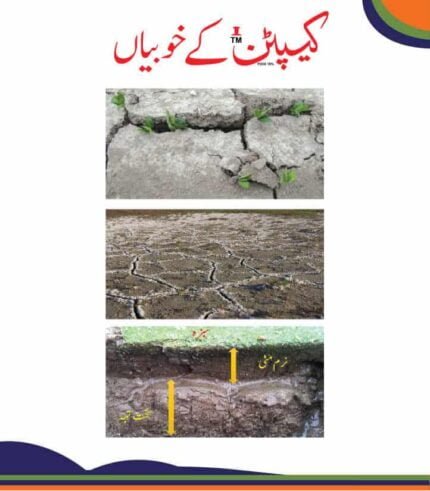
دائرہ اثر : فاسفورس کی کمی کو دور کرتا ہے۔ زمین کی زرخیزی میں اضافہ فراہم کرتا ہے. کلوروفل کے عمل کو تیزکرتاہے ۔ یہ مٹی کو نرم کرتا ہے اور اسی وجہ سے پانی جذب کرنے کے لیے مٹی کی تاثیر کو بہتر بناتا ہے۔
Conclusion
SSP and DAP are both important phosphorus fertilizers, but they have different nutrient compositions.
SSP supplies phosphorus, calcium and sulphur, while DAP supplies nitrogen and phosphorus. Understanding these differences helps farmers select a suitable fertilizer according to their soil conditions and crop requirements.
Always use fertilizer according to soil analysis, product specifications and local agricultural recommendations.